Selected Publications
Alrashdi, B., Dawod, B., Tacke, S., Kuerten, S., C么t茅, P. D., Marshall, J. S.听(2021)听Mice Heterozygous for the Sodium Channel Scn8a (Nav1.6)听Have Reduced Inflammatory Responses During EAE and Following LPS听Challenge.听Frontiers in Immunology, 12, 533423
Smith, B. J., C么t茅, P. D., Tremblay, F. (2020) Voltage-gated sodium听channel-dependent retroaxonal modulation of photoreceptor function听during post-natal development in mice. Developmental Neurobiology, 2020 Nov 28. Epub听ahead of print.
Alrashdi, B., Dawod, B., Schampel, A., Tacke, S., Kuerten, S., Marshall, J. S., & C么t茅, P. D. (2019). Nav1.6 promotes inflammation and neuronal degeneration in a mouse model of multiple sclerosis. Journal of neuroinflammation, 16(1), 215.
Smith BJ, C么t茅 PD, Tremblay F. (2017)听Contribution of Nav1.8 sodium channels to听retinal function.听Neuroscience听340: 279鈥�90.
Smith BJ, C么t茅 PD, Tremblay F. (2015)听Dopamine modulation of rod pathway听signaling听by听suppression of GABAC feedback to rod-driven depolarizing bipolar cells. Eur J Neurosci. 42(6):2258-70.
Sato T, Fujita M, Shimizu Y, Kanetaka H, Chu LW, C么t茅 PD, Ichikawa H. (2015) Glial reaction in the spinal cord of the degenerating muscle mouse (Scn8a (dmu)). Neurochem Res. 40(1):124-9.
Smith BJ, C么t茅 PD, Tremblay F. (2015)听D1 dopamine receptors modulate cone ON bipolar cell Nav channels to control daily rhythms in photopic vision. Chronobiol Int. 32(1):48-58.
Smith BJ, Wang X, Chauhan BC, C么t茅 PD, Tremblay F. (2014) Contribution of retinal ganglion cells to the mouse electroretinogram. Doc Ophthalmol. 128(3):155-68.
Smith BJ, Tremblay F, C么t茅 PD.听(2013)听Voltage-gated sodium channels contribute to the b-wave of the rodent electroretinogram by mediating input to rod bipolar cell
GABA(c) receptors.听Exp Eye Res. 116: 279-290.
Murphy JP, C么t茅 PD, Pinto D. (2012)听Monitoring the Switch: The Warburg Effect and Targeted Proteomic Analysis of Cancer Metabolism.听Curr Proteomics.听9 (1): 26-39.
Smith BJ , C么t茅 PD (2012) Reduced Retinal Function in the Absence of Nav1.6. PLoS ONE 7(2): e31476. doi:10.1371/journal.pone.0031476
Sato T, Shimizu Y, Kano M, Suzuki T, Kanetaka H, Chu LW, C么t茅 PD, Shimauchi H, Ichikawa H. (2011) Increase of CGRP expression in motor endplates within fore and hind limb muscles of the degenerating muscl. mouse (Scn8a(dmu)). Cell Mol Neurobiol. 31(1):155-61.
Ichikawa H, Kano M, Shimizu Y, Suzuki T, Sawada E, Ono W, Chu LW, C么t茅 PD. (2010) Increase of c-Fos and c-Jun expression in spinal and cranial motoneurons of the degenerating muscle mouse (Scn8a(dmu)). Cell Mol Neurobiol. 30(5): 737-42.
Shafey D, C么t茅 PD, De Repentigny Y, Kothary R. (2005) siRNA mediated knockdown of the Survival of Motor Neuron (Smn) protein in cell culture and in transgenic mice. Exp Cell Res 311(1): 49-61.
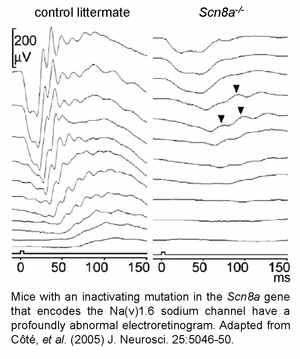
C么t茅 PD, De Repentigny Y, Coupland SG, Schwab Y, Roux M, Levinson SR, Kothary R. (2005) Physiological maturation of photoreceptors depends on the voltage-gated sodium channel NaV1.6 (Scn8a). J Neurosci. 25 (20): 5046-50.
C么t茅 PD, Moukhles H, Carbonetto S. (2002) Dystroglycan is not required for localization of dystrophin, syntrophin, and neuronal nitric-oxide synthase at the sarcolemma but regulates integrin alpha 7B expression and caveolin-3 distribution. J Biol Chem. 277 (7): 4672-9.
De Repentigny Y, C么t茅 PD, Pool M, Bernier G, Girard S, Vidal SM, Kothary R.
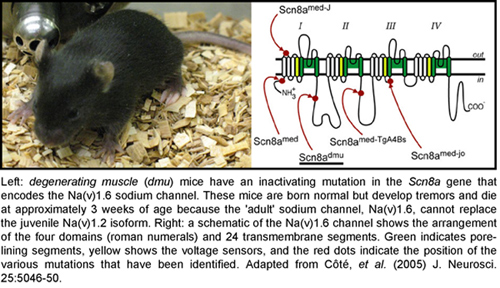
(2001) Pathological and genetic analysis of the degenerating muscle (dmu) mouse: a new allele of Scn8a. Hum Mol Genet. 10 (17): 1819-27.
Jacobson C, C么t茅 PD, Rossi SG, Rotundo RL, Carbonetto S. (2001) The dystroglycan complex is necessary for stabilization of acetylcholine receptor clusters at neuromuscular junctions and formation of the synaptic basement membrane. J Cell Biol. 152 (3): 435-50.
C么t茅 PD, Moukhles H, Lindenbaum M, Carbonetto S. (1999) Chimaeric mice deficient in dystroglycans develop muscular dystrophy and have disrupted myoneural synapses. Nat Genet. 23 (3): 338-42. SEE ALSO NEWS AND VIEWS ARTICLE: Chamberlain J (1999) The dynamics of dystroglycan Nat Genet. 23 (3): 256-8.
Links
|


 am interested in several aspects of the development and function of the nervous system in both health and disease. My group uses the mammalian retina to study neuronal biology because of its extensive postnatal development, layered cellular architecture, relatively simple circuitry, and accessibility. Indeed, because of these features, the retina is probably the best characterized part of the central nervous system. Here are two projects that are ongoing in my laboratory.