Potential Honours Projects
Are you a student looking for an Honours thesis project? Our Department has many faculty members working on a range of exciting research initiatives, and there are many opportunities for students to get involved in them as part of their Honour鈥檚 thesis. Below you will find some of the potential projects that EES faculty are pitching for the coming year. Click on each faculty member鈥檚 pitch to get a better idea of the project, and then contact them directly if you are interested in working with them.
![]() |
Lexie Arnott Instructor lexie@dal.ca |
Ongoing project
Description: The carbonate islands of Bermuda sit on a volcanic rise of uncertain origin. Although the basaltic flows appear to have originated at the mid-ocean ridge over 100Ma, there are younger intrusions of ultramafic lamprophyre with an unclear source. Two lines of research are proposed for the upcoming year.
Project Title: Study of Biotite in Bermuda Lamprophyres
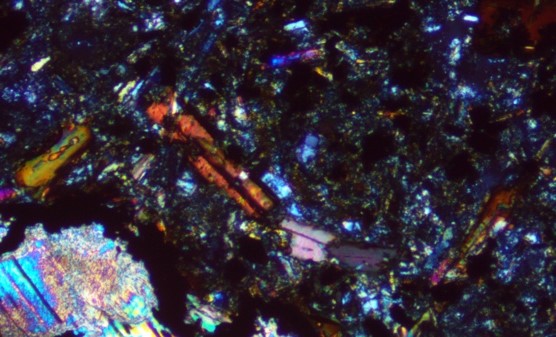
Description: There is a lack of understanding about the timing of phlogopite crystallization in ultramafic lamprophyres in general, and in the Bermuda Rise, specifically. Petrography and chemistry of the phlogopite will be used to determine whether these are primary or secondary in nature and what the chemistry of the fluids in the rocks. Study may include petrographic work, electron microprobe, and laser ICP-MS.
Project Title: Origin of Carbonate in the Bermuda Rise
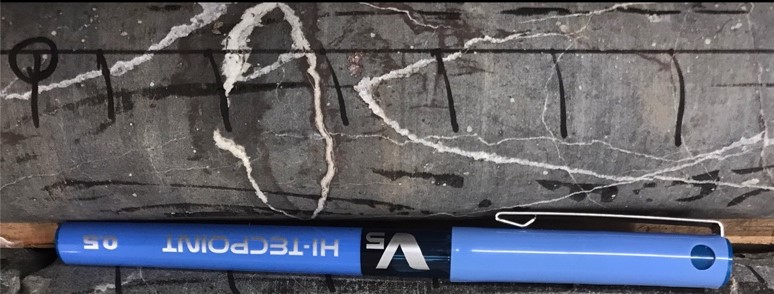
Description: It has been proposed by some that the carbonate veining in the volcanic rocks is magmatic in origin, related to the silica-undersaturated intrusive rocks. Other propose that it they are recycled marine carbonates. Paragenesis of the veins will be determined using detailed petrologic and geochemical study. Research may include microscopy, electron microprobe, cathodoluminescence, laser ICP-MS, and carbonate isotopes.

![]() |
Isabelle Coutand Associate Professor icoutand@dal.ca +1 902 494 7827 听 |

Project Title: Constraining the timing of forearc unroofing along the Hikurangi margin (New Zealand) using (U-Th)/He thermochronometry
Short description: The aim of this research project is to prepare and analyse between 5 to 10 rock samples collected along a transect crossing the inner forearc of the Hikurangi margin in the Southeastern part of the North Island of New Zealand. There, the Pacific Plate is subducted underneath the Australian plate since the late Cenozoic and the convergence has generated extensive continental deformation triggering unspecified amount of crustal unroofing. This project includes extensive laboratory work and is suitable for students interested in Geochronology and Tectonics.
![]() |
Richard Cox Instructor richard.cox@dal.ca +1 902 494 3362 |
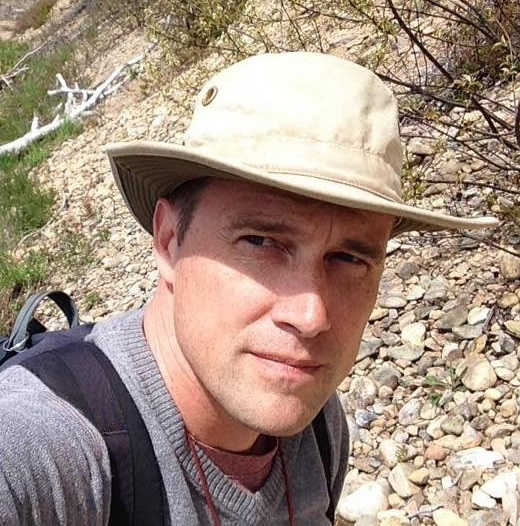
Project Title: Microstructural assessment of syn-tectonic porphyroblast growth and relative strain rates in metapelitic schists, Loch Leven, Scotland.
Description: This project will investigate deformation in Dalradian metapelitic sequences in a series of transects along the shores of Loch Leven in the West Highlands of Scotland. In particular, the project will seek to determine strain rates recorded by syn-metamorphic porphyroblasts of garnet. The study will involve field work where detailed mapping and measurement of poly-deformed rocks will be carried out. The student will therefore be expected to attend ERTH4040 during the first two weeks of May 2027, and stay for one week after the field school to carry out their thesis field work. Loch Leven is a fjord which runs east-west through spectacular mountain scenery and crosscuts a series of folds which formed during the Caledonian Orogeny. The rocks have undergone several generations of folding (locally D1 to D3), and the relationships between the fold structures and porphyroblast growth at four localities will be carefully documented. Several oriented samples will be collected and will be examined using detailed petrography and digital imaging. The orientation of inclusion trails within syn-metamorphic garnet will be measured in detail. Quartz inclusions will then be studied using Raman spectroscopy. This will allow the quartz-in-garnet (QiG) barometer to be applied, which in turn will show the range of depths recorded during porphyroblast growth. Raman spectroscopy will also be used to map the porphyroblasts themselves. Because Raman peak positions shift in response to both cation substitution (chemical zoning) and residual elastic stress, comparing spectral maps with chemical data will isolate localized stress zones and show whether asymmetric chemical zones reflect true growth geometry or post-growth tectonic shearing. Raman mapping of the garnets will be combined with SEM-EDX analysis to produced X-ray maps and major element zoning profiles. Mn-zoning profiles in particular will be measured in as much detail as possible. The samples will then be analyzed using LA-ICP-MS to show the distribution of trace-elements (REE, Y, Ti, Cr, etc.) within the garnet porphyroblasts. This will be used to further constrain discreet growth pulses, linked to different metamorphic events. Finally, LA-ICP-MS analysis of quartz inclusions will also be used to monitor trace-element variations (Al, Li, Na, Ge, Ti, etc.) which indicate changes in growth rates and fluid reactions, and also to determine growth temperatures using the Titanium-in-quartz thermometer. The latter will be combined with the QiG barometer to produce PT-paths representing the conditions of metamorphism recorded during porphyroblast growth. By combining the field measurements and microstructural data, with the recorded PT-conditions, P-T-d histories can be constructed. Finally, when combined with analysis of diffusion rates recorded by Mn-zoning profiles in garnet, the entire P-T-d-t history, including strain rates, can be constructed for this area. Differences in strain-rates recorded across the different folds will be noted and the data will be used to model the tectonic evolution of this area.
Students interested in this project should contact Dr. Richard Cox (richard.cox@dal.ca).
Project Title: Determining the absolute ages of deformation and metamorphism in the Dalradian Highlands, Loch Leven, Scotland, using in-situ LA-ICP-MS/MS Rb-Sr and K-Ca dating of micas.
Description: This project will investigate the timing and mechanisms of regional deformation and fluid-assisted mass transport within the garnet-zone Dalradian metasediments, Loch Leven, Scotland. The student will be expected to attend ERTH4040 during the first two weeks of May 2027, and to stay for one week after the field school to carry out their thesis field work. In the Loch Leven area, syn-tectonic growth of muscovite and biotite can be grouped into four fabrics. Type 1 form the main D1 schistosity. Type 2 form the D2 schistosity which overprints the D1 micas. The Type 2 micas and are therefore likely to be best represented in pressure shadows around garnet and plagioclase porphyroblasts. In addition, metamorphism drove the development of hydrothermal segregation ("sweat") veins along D2 fold hinges and boudinage structures which form the Type 3 micas. Type 4 micas are those which form crenulation cleavages and represent growth during late D2 or a D3 deformation event. To resolve the absolute timing of these events, this study will use an integrated, multi-scale approach linking structural field mapping directly to advanced microanalysis and in-situ geochronology. Fieldwork will focus on collecting oriented samples across a transect from pervasive regional mica schists into highly competent, folded quartz-psammites and localized hydrothermal segregation veins. Following high-resolution petrographic imaging to establish structural micro-textures, samples will undergo a non-destructive screening protocol. Raman spectroscopy will map and identify muscovite structural polytypes (e.g., peak-metamorphic 2M鈧 vs. low-temperature fluid-reset 1M/1Md structures). SEM-EDX backscattered electron (BSE) imaging and compositional mapping will be used show zoning and micro-scale alteration, interlayer heterogeneities, and inclusions. The carefully documented structural and chemical domains within the micas will then be analyzed using a dual mass spectrometry approach. In-house conventional LA-ICP-MS will generate trace-element maps (e.g., Ti, Ba, Rb, Sr, REEs) to apply Ti-in-muscovite and biotite thermometers and fingerprint chemical growth zones. Finally, laser ablation triple-quadrupole ICP-MS (LA-ICP-MS/MS) at the University of New Brunswick will be used to determine texturally constrained Rb-Sr and K-Ca ages. Rb-Sr and K-Ca have different closure temperatures in both muscovite and biotite (Rb-Sr: 500-600 oC in muscovite and 300-400 oC in biotite. K-Ca: 350-500 oC in muscovite and below 300 oC in biotite). The resulting dataset will provide high-resolution absolute time constraints on metamorphism in this section of the Caledonian Orogeny. In addition, the variation in closure temperatures between Rb-Sr and K-Ca systems in these minerals will allow T-t paths to be constructed. The anticipated results will allow the tectonic evolution of this area to be modeled.
Students interested in this project should contact Dr. Richard Cox (richard.cox@dal.ca).
Project Title: Microstructures, Raman spectroscopy and Rb-Sr dating of deformation in the Red Rocks Granites, Ardgour, Scotland.
Description: This project will investigate deformation associated with the world-famous Great Glen Fault in the West Highlands of Scotland. In particular, the project will examine how deformation has been recorded by the Red Rocks granites which are exposed along the western shore of Loch Linnhe by Ardgour, an area of outstanding natural beauty. The study involves field work focusing on detail mapping and measurement of undeformed granitic rocks, granitic rocks where C-S structures are present, and rocks where brittle deformation has clearly occurred. The student will be expected to attend ERTH4040 during the first two weeks of May 2027, and to stay for one week after the field school to carry out their thesis field work. The documented samples will then be examined using optical petrography and digital image analysis. This will help to define grain size distributions, the density of crystals with undulous extinction and fracture densities related to recrystallization in quartz. In addition, the petrographic study will be used to identify primary mineral textures versus C-S mineral structures defined by quartz and feldspar. Deformation recorded by sheet silicates present, namely chlorite, muscovite and biotite will also be documented. Raman spectroscopy will be employed to acquire spectra from quartz in each textural domain to map the main peak positions and look for peak shifts and broadening which indicate deformation at different temperatures. The Raman spectra can also be used calculate the pressures recorded by quartz using peak broadening models and the quartz-in-feldspar inelastic barometer. Raman spectroscopy will also be applied to sheet silicates to identify the polytypes present which represent growth under ductile to brittle temperature regimes. Samples will also be examined using BSE imaging and X-ray mapping using SEM-EDX analysis to help link main-phase mineral chemistry and zoning to deformation textures. The samples will then be analyzed for trace-element zoning using conventional LA-ICP-MS analysis carried out at Dal. This would allow recorded temperatures to be calculated using the Ti-in-quartz and possibly Ti-in-biotite and Ti-in-muscovite thermometers, as well as screening mica samples for Rb/Sr ratios. Finally, the ages recorded by muscovite and biotite will be determined using in-situ Rb-Sr and K-Ca dating of individual grains with a triple-quad LA-ICP-MS and at the University of New Brunswick. The record of deformation in the Red Rocks samples will also be compared with analysis of samples from the adjacent Moine quartzites and granitic gneisses to evaluate lithological controls on deformation, and to distinguish Great Glen Fault overprinting from older regional fabrics. The anticipated results will show the relative timing and overall PT-conditions of the fault regime that caused the deformation of these granitic rocks.
Students interested in this project should contact Dr. Richard Cox (richard.cox@dal.ca).
![]() |
Tim Fedak Adjunct Professor Curator of Geology, Nova Scotia Museum tim.fedak@novascotia.ca |
Project Title: Museum Collections-Based Research
Nova Scotia Museum, Geology Collections
The topics and collections below may be of interest for undergraduate honours research projects. The curator can co-supervise research and facilitate access to relevant museum collections for new research. Contact the Curator to discuss interest and potential projects. tim.fedak@novascotia.ca
Sand/Soil and Mineralogy
- Specimens for comparative studies to support studies of micro-plastics in modern environment. Historic samples back to 1870s.
- Agate: Microstructural studies of systematic collections.
Invertebrate Palaeontology
- Silurian collection from Arisaig, also McGill: Studies of morphological variation and taphonomy. brachiopods, cephalopods, starfish.
- Carboniferous Windsor Group, with Acadia: Stratigraphic collections include type specimens.
Carboniferous Palaeobotany
- Cape Breton Fossil Plants, with CBU: Carboniferous palaeobotany, Zodrow collection and historic collection from 1860s.
- New, unique preservation of fossil trees in gypsum evaporites.
Interglacial Palaeobiology - Mastodon Sinkholes of Nova Scotia
- Ongoing description and analysis of samples collected from 1990s.
- Mastodon bones, wood turtles, painted turtles, wood, moss, seeds, and unprocessed mud samples. ~80,000 years old.
Curation and 3D Digitization - Permian Trackways
- 3D digitization of reference collection that was collected in 1994.
![]() |
Yana Fedortchouk Associate Professor; Co-Director - Experimental High Pressure Geological Research Laboratory yana@dal.ca +1 902 494 8432 听 |
Project Title: Emplacement and composition of kimberlite melts and problem of diamond survival
Description: Kimberlites are exotic but very important volcanic rocks, which are the main primary source of diamonds and also the deepest magmas that reach the surface of the Earth. The origin of kimberlites is linked to processes in the subcontinental mantle and is still poorly understood. Due to their complex composition, we still do not know the composition, origin, and eruption conditions of kimberlites. Diamonds grow deep in the Earth鈥檚 mantle where they get picked by kimberlite magma and brought to the surface during fast kimberlite ascent. High-temperature kimberlite magmas are destructive for diamonds and diamond survival depends on the crystallization conditions and ascent rate of kimberlites. The two following experimental projects will help to address some of these questions.
Project 1: Experimental study of the effect of kimberlite crystallization conditions on diamond dissolution rate
Diamond dissolution in kimberlite magma during its ascent can make a large impact on diamond grade of a kimberlite pipe. Previous experimental studies examined the effect of temperature, pressure, oxygen fugacity and melt composition on diamond dissolution rate. However, the existing data has many gaps in experimental conditions which preclude development of a comprehensive model for diamond dissolution. Furthermore, the effect of solvent (melt vs. fluid) and its composition on diamond dissolution rate is very poorly constrained.
This study will conduct a series of high-pressure-temperature experiments using piston-cylinder apparatus to fill the gap in the existing experimental dataset. Especially the focus will be on exploring the effect of kimberlite composition on diamond dissolution. The results will be incorporated with a database of the existing experimental data to develop a model for calculating diamond dissolution rate using Matlab or another modelling software.
This study will provide 1) an important tool for calculating diamond preservation for various T-P-time scenario of kimberlite ascent; 2) comparison of the results of this calculation to the existing estimates of kimberlite crystallization conditions will allow to put better constraints on kimberlite ascent rate.
Project 2: Experimental study of kimberlite crystallization
Hypabyssal kimberlite is the best representation of kimberlite melt composition. Hypabyssal kimberlites from worldwide localities shows seven mineral phases in the groundmass, which represent crystallization from kimberlite magma. However, experimental studies producing these mineral phases are extremely limited and do not allow to examine the role of volatiles and temperature. Towards this end, high-pressure-temperature experiments will examine liquidus phases and crystallization sequence in kimberlite melt at 1000 鈥 1200oC and pressure 0.5 鈥 1 GPa. The effect of volatiles (H2O and CO2) will be examined. Experiments will be conducted in piston-cylinder apparatus and examined using Scanning Electron Microscope and Electron Microprobe analyses. This study will shed more light on the composition of kimberlite magma.
![]() ![]() |
Susan Gass University Teaching Fellow susan.gass@dal.ca +1 902 494 4530 听 |
Project Title: Pollinator habitat preferences in an urban park
Description: This project offers the opportunity to join in a one day per month data gathering on bumble bees in the Wolfville Woodland Trail. Transport to Wolfville will be provided.
![]() |
Djordje Grujic |
Project Title: High-Resolution Structural Mapping of a Subduction Plate Boundary
Description: Subduction zone dynamics, including earthquake generation, are profoundly influenced by the rheological properties of the subduction interface. Current models estimating interface viscosity rely on simplified endmember flow laws or basic mixing models, yet the actual variation in interface materials can theoretically produce viscosity differences spanning up to five orders of magnitude. These variations are predominantly temperature-dependent, but even within shear zones deformed at similar temperatures, shear strength can vary by up to a factor of 50. This variability arises from differences in matrix composition, shear zone width, and block distributions within the shear zone.
To better constrain the range of strength and viscosity along deep, viscous subduction interfaces, this project will focus on a high-resolution structural and geological map of an exhumed deep subduction interface in the Swiss Alps. The study area, a recently deglaciated terrain with nearly 100% rock exposure, offers an exceptional opportunity to document the structural features of this subduction zone.
The project involves:
Geological and Structural Mapping: Utilizing high-resolution drone imagery to create a detailed map of the shear zone, capturing the geometry, structural relationships, and spatial distribution of rock types.
Rock Type and Material Database: Compiling a comprehensive database of lithologies, block-and-matrix distributions, and compositional variations within the subduction interface.
Numerical Shear Zone Simulations: Applying numerical shear experiments to quantify the bulk shear strength and viscosity of the mapped shear zone.
By integrating field observations with numerical modelling, this project aims to provide new insights into the mechanical behaviour of subduction interfaces, enhancing our understanding of subduction zone dynamics and their implications for tectonics and seismicity.
Project Title: Brittle-Ductile transition along seismogenic faults
Aim of the project: Identify deformation processes that enable the continuum of stress along continental megathrusts.
Objectives: Microstructural investigation of thin sections from shear zones that have undergone a transition from crystal plastic to frictional deformation. Microstructural observations will be performed using a petrographic microscope and a scanning electron microscope. Mineral phases will be identified using the electron microprobe.
Qualifications: courses in Structural Geology and Metamorphic petrology.
Bonus: technical writing skills, meticulous work in a research lab, and high motivation for academic research.
![]() |
Amy Mui Instructor & Academic Advisor amy.mui@dal.ca +1 902 494 4197 听 |

Project Title: Conservation of freshwater turtles
Description: Native freshwater turtles are declining worldwide and practical methods of reducing mortality are urgently needed. In collaboration with the Chemistry Department and the NS Turtle Patrol, this project will investigate the role of the olfactory landscape and its potential for decreasing predation of turtle eggs during the sensitive 24-48 hours post nesting. This project involves a fieldwork component, and a vehicle is required. This particular project is not likely to be eligible for the GIS certificate. Students may also propose their own topics which can be discussed based on data availability and resources. All projects are pending ethics approval.
Project Title: Mapping wildlife habitat, connectivity, and measures of fragmentation
Description: Species are declining at an alarming rate across the globe and there is a need for spatial-temporal methods of analyses to contribute information to conservation management. Open data on biodiversity, protected areas, and landcover type among others are widely available to support research in this area. Potential projects are possible and up to student interest and skill level and can include research on habitat change over time, examining wildlife-human interactions, modeling landscape connectivity, developing change models over time, and quantifying fragmentation and time to extinction. Students with skills in geospatial analysis, R coding, and/or remote sensing would be well-suited to this type of research.
![]() |
Owen Sherwood Assistant Professor owen.sherwood@dal.ca +1 902 494 3604 |

Project Title: Various projects in isotope biogeochemistry.
Description: The Stable Isotope Biogeochemistry Lab works on a wide range of topics, from trophic ecology to the Holocene-scale climate change. We have state of the art analytical facilities located in the Steele Ocean Science Building, and an amazing and supportive team of researchers from undergraduate Honours through MSc, PhD and postdoc levels. Depending on student interest, Dr. Sherwood and the lab can support Honours projects in any of the following general areas:
1. Characterizing the composition of marine sedimentary organic matter to better inform the Blue Carbon economy.
2. Developing new climate change proxy records from Nova Scotia lakes.
3. Reconstructing climate change impacts on the feeding ecology of bio-archive organisms (e.g., corals, clam shells, fish scales, bird feathers, whale baleen)
Prospective students should have a genuine interest in scientific discovery, willingness to work long hours in the lab and field, and an aptitude for data analysis and writing. Please reach out to Dr. Sherwood (owen.sherwood@dal.ca) to discuss ideas and opportunities.
![]() |
Shannon Sterling Associate Professor shannon.sterling@dal.ca +1 902 494 7741 |

Research Area: Impact of precipitation events on stream alkalinity and acid episodes in Nova Scotian rivers, and potential impacts of climate change
Please contact Shannon to discuss potential projects in this field.
![]() |
Tarah Wright Professor tarah.wright@dal.ca +1 902 494 1831 |
Project Title: Nature Check: Examining Nova Scotian鈥檚 Connection to Nature (C2N)
Description: Nature Check is a province-wide study that establishes the first comprehensive baseline of how Nova Scotians perceive, experience, and emotionally connect with nature. It examines the full spectrum of nature interactions from neighbourhood green spaces to coastal and wilderness experiences while identifying the social, economic, and geographic barriers that limit access, especially for marginalized or underserved communities. The Honours student will work directly with key stakeholders to co-develop the survey questions, assist with province-wide distribution, and lead the analysis of the resulting dataset. This role requires a strong background in statistical analysis and data interpretation, as well as a genuine interest in environmental education, public engagement, and community outreach. The student will play a central part in shaping both the research process and its impact across Nova Scotia. Students interested in this project should contact Dr. Tarah Wright (tarah.wright@dal.ca).
*On sabbatical 2025/26 and not taking any new students at this time.

![]() |
Miao Zhang |
Project Title: Seismological Investigation of Blasts Near Halifax
Description: The aim of this project is to investigate quarry/mining blasts near Halifax using a broadband seismic station in Halifax. Furthermore, these blasts serve as seismic sources for constructing layered velocity models of the region. This project heavily relies on computer programming and digital data analysis, requiring a significant time commitment. Students interested in this project should contact Dr. Miao Zhang (miao.zhang@dal.ca) at least three months before the class begins to ensure they can receive timely prerequisite training.