

Sciographies is a radio show and podcast about the people who make science happen, presented by The Faculty of Science and campus-community radio station CKDU 88.1 FM. This article is the second in a series that will feature excerpts from each new episode released this fall.
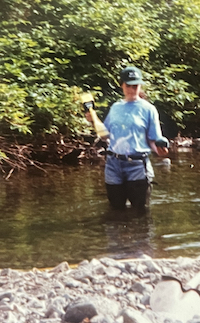
When growing up near the Capilano River in North Vancouver, Shannon Sterling witnessed unsettling events like landslides and dwindling salmon populations 鈥� the consequences of clear-cutting old growth forests and the construction of a dam. These experiences underscored the profound influence of human activity on the natural environment, leading Sterling on a path to study geography, hydrology, and the global water cycle.
Today, Dr. Sterling is an associate professor in the Department of Earth and Environmental Sciences. When she鈥檚 not teaching her students about the science behind climate change, she鈥檚 leading the charge as Chief Scientific Officer at , the carbon-dioxide removal startup she founded last year. By increasing the alkalinity of rivers, CarbonRun technology captures carbon from the atmosphere while restoring acidified river habitats at the same time.
In this week鈥檚 episode of Sciographies, host David Barclay sits down with Dr. Sterling to talk about building her career as an environmental scientist and the research that led to founding her startup.
Listen to a preview of Dr. Sterling鈥檚 episode
听
Here are some excerpts from the episode, edited for clarity and length.
 Choosing between science and activism
Sterling: [During my Master鈥檚] I was living in a house full of people in Greenpeace who were out there protesting Clayoquot Sound. They had Midnight Oil coming, they were all getting arrested. But [a member of my Master鈥檚 committee] Mike Church, he was on the scientific panel for Clayoquot. And I was like, I want to be on that side. He seems to have more influence and made a difference.
Barclay: So, there鈥檚 some point where you decide to either chain yourself to a tree or take an academic route?
Sterling: Yes. Faith in science can make a difference, right? How do you choose your impact? Maybe a criminal record isn鈥檛 the best way to go.
Planting the seed for CarbonRun
Sterling: I was on a panel looking at the salmon numbers that had been plummeting over the last ten years in Nova Scotia, which really surprised me. I worked with Dr. Eddie Halfyard, a salmon biologist鈥� We started measuring and discovered that the water chemistry here wasn鈥檛 in good shape. We found that aluminum, which is toxic, had been increasing.
Barclay: The rivers had aluminum in them, but they were also acidifying 鈥� is that right?
Sterling: Yes鈥� We discovered that the soils never recovered from acid rain, which had titrated out all the good cations like calcium, magnesium. Then there was another layer with climate change. The soils were warming and producing more acids as well. It was all causing this perfect storm of bad water chemistry that was killing the salmon and the whole food chain鈥� The only way to fix it was to add calcium, alkalinity, back into the system.
Barclay: Is this where the idea for your business comes from? It鈥檚 not just to remove carbon from the atmosphere, but to replenish some of the minerals missing [in rivers]?
Sterling: Definitely鈥� Canada had this problem [of acidified areas] and the government didn't do any mitigation work. But Norwegians had 鈥� they've been adding alkalinity to their rivers鈥� There are a lot of studies on this. The Nova Scotia Salmon Association fundraised to bring a dosing system developed in Norway here鈥� Since then, the Smolt population has tripled. It鈥檚 really made a big difference鈥� So, we were trying to figure out how to do more of this. More rivers need this. And then this carbon credit thing planted the seed鈥� Because even with emissions reductions, it鈥檚 not enough. We have to start sucking down CO2.
Grappling with the issue of climate engineering
Barclay: How do you feel about geoengineering [as a climate change mitigation strategy]?
Sterling: That鈥檚 a hard one, right? I founded CarbonRun and I had this heaviness with me. People were saying, 鈥極h, this is so great!鈥� I agree, it鈥檚 really good 鈥� I鈥檓 completely convinced. But I鈥檓 really sad that I have to be doing this.
Barclay: The interesting angle that I didn't appreciate until this conversation is that there was already this type of modification of the environment happening for [habitat restoration].
Sterling: Yes, for decades. That鈥檚 the more comfortable moral zone. It鈥檚 not a big leap. You're still restoring habitats that need it, and with climate change, doing nothing is not a great option anymore.
 听
听
Listen to the entire episode of Sciographies at 4:30 PM today on in Halifax or find it on , , and other popular podcasting platforms. You can also listen to previous Sciographies episodes on the same platforms or at and dal.ca/sciographies.