
Research
Royal Society honours Dal oceanographer for globally recognized climate research

One of Canada's highest academic honours goes to Dal oceanographer Dr. Katja Fennel for her globally recognized contributions to climate research. Read more.
Featured News

Monday, September 14, 2026
Enabling pharmacists to prescribe preventive Lyme disease medication shifted hundreds of routine cases out of emergency departments, easing pressure on the health-care system, shows a new 黄色直播 study.

Tuesday, September 8, 2026
As it enters a new era, the MacEachen Institute of Public Policy and Governance is expanding its efforts to connect researchers, decision-makers, and communities on pressing national and regional issues.
Thursday, August 20, 2026
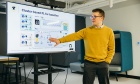
A new Dal-hosted research institute will connect researchers, students, partners and communities to advance AI research, learning and innovation rooted in Atlantic Canada.
Archives - Research
Monday, May 6, 2024
Dr. Graham Gagnon's research programs have trained over 250 students, secured more than $50 million in research funding, and positioned him as a leading authority in applied water and wastewater research in Canada.
Friday, May 3, 2024
The state-of-the-art facility on Studley Campus will empower researchers in the areas of advanced-energy storage, clean energy, and sustainable materials with flexible labs and spaces that favour collaboration.
Thursday, May 2, 2024
The chief executive officer and scientific director of the Ocean Frontier Institute has been selected by the Oceanographic Society of Japan as the 2024 recipient of the award in recognition of outstanding contributions to the advancement of ocean upwelling research.
Thursday, May 2, 2024
Researchers have found that reclusive, deep-sea dwelling beaked whales are exposed to 14 human-made threats despite being found in habitats far from cities, ports and other populous areas.
Thursday, May 2, 2024
Hundreds of members of the Dal community converged on the Weldon Law Building last week for a day of learning, connection, and serendipity.