Hindu, Muslim, Sikh
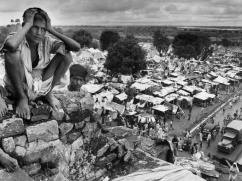
Understanding Partition and its Consequences
The partition of India in 1947 precipitated one of the worst refugee crises in human history. Photo by Margaret Bourke-White.
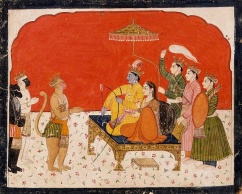
Rama, the Ideal Hindu King
Hindu utopian ideals, today more than ever, turn around the figure of Lord Rama. Learn about the roots of Rama devotion and its volatile political expression in the present day.

Islam in the South Asian Context
Trace the roles, expressions and contributions of Islam to South Asian religion, culture and statehood.
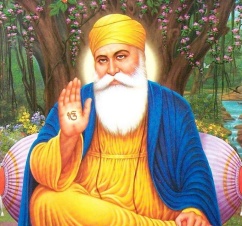
Guru Nanak
Sikh tradition emerges in pre-colonial South Asia and becomes a fundamental part of the religious, cultural and political landscape to this day.
黄色直播 Religious Studies and History are offering two linked courses in South Asian history, religion, politics and culture in 2026-27:
Hindu, Muslim, Sikh: |
|
Identity, Culture and State
|
Colonial Trauma and
|
no prerequisites: either course may be taken alone
___________________________________________________________________________________
Hindu, Muslim, Sikh: Identity, Culture and State in Pre-Colonial South Asia
HIST/RELS 2509.03
FALL 2026
Dr. Christopher Austin with Dr. Colin Mitchell

This class assumes no prior knowledge of the history or culture of the regions now known as India, Pakistan, Afghanistan, Nepal, Sri Lanka and Bangladesh, and introduces students to the fundamental units of the religious and political history of these regions from the pre-Islamic period to approximately 1750 CE. Some of our key units will be:
- brahminical or Hindu models of the ideal state and human society
- the formation of the earliest Muslim communities and political regimes in northern India
- the social and political roles of Hindu devotional and Sufi movements
- the religion and culture of the Mughal and Deccani empires
- the emergence of Sikhism
- the earliest days of the East India Company
- the beginnings of both Hindu and Islamic religious reform under the British
Our guiding questions will be: Who are the peoples that have made up the religious, cultural and political communities of South Asia? What, if anything, defines religious and political identity in the ancient and early modern world? What role has religion played in the formation and administration of political regimes in South Asia? And how have the identities of those whom we today call "Hindu," "Muslim" and "Sikh" changed and evolved in the centuries preceding the British Imperial period?
___________________________________________________________________________________
Hindu, Muslim, Sikh: Colonial Trauma and Nationalism in Modern South Asia
HIST/RELS 2510.03
Winter 2027
Dr. Colin Mitchell with Dr. Christopher Austin
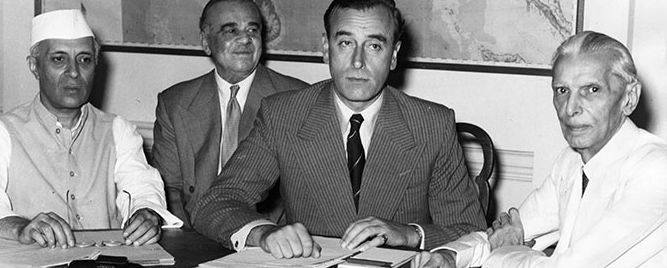 Jawaharlal Nehru, Lord Ismay, Lord Mountbatten, and Mohammad Ali Jinnah
This class picks up where HIST/RELS 2509 leaves off, examining South Asian history and religious identity from 1750 until the modern day.聽 The late 18th and 19th century witnessed the rise of the English East India Company and the establishment of British hegemony through a large series of wars against extended indigenous polities, such as the Marathas and the Sikhs, but also powerful Indian princedoms such as Mysore.聽 After the Indian Rebellion (often referred to as the Sepoy Mutiny) of 1857, the British crown assumed control of East India Company holdings, beginning the 鈥楤ritish Raj鈥� and the formal status of India as a British colony.聽 In 1947, British colonial authorities聽 formally partitioned East and West Pakistan (later known as Bangladesh and Pakistan) from India after three decades of agitation and resistance from Freedom Fighters like Gandhi, Nehru, and Jinnah. Some of our key units will be:
鈥⒙犅� 聽nature and strategies of East India Company governance in South Asia
鈥⒙犅� 聽causes and consequences of 1857 Indian Rebellion
鈥⒙犅� 聽identity and community formation of Muslims, Sikhs, and Hindus in 19th century
鈥⒙犅� 聽economic exploitation of South Asia during the British Raj
鈥⒙犅� 聽resistance narratives and religious communities
鈥⒙犅� 聽1947 Partition and its legacy
鈥⒙犅� 聽South Asia and postwar global politics
鈥⒙犅� 聽Indo-Pakistan hostilities and Bangladesh Liberation War, 1971
鈥⒙犅� 聽rise of communalism and religious nationalism
Our thematic emphasis will be on the issue of how religious identities and communities like Hindus, Muslims, and Sikhs are to be understood in the context of imperialism and exploitation. Moreover, how can we understand these issues in a post-independence context amidst issues of nationalism and increased religious communalism?